
From office paper and packaging materials to food scraps and production offcuts, every business generates waste. While some waste is unavoidable, much of it can be prevented through thoughtful planning and everyday operational improvements. Reducing waste isn’t just good for the environment, it can also help businesses lower operating costs, improve efficiency, and make better use of resources. Waste reduction doesn’t require a complete overhaul of operations. Often, the most impactful changes start with simple adjustments that reduce unnecessary purchases, extend the life of materials, and keep valuable resources out of landfill.
Start by Understanding Your Waste
Before making changes, it’s important to understand where waste is being generated. Conducting a simple waste audit can help identify the materials your business throws away most frequently and uncover opportunities to reduce them.
Walk through your facility and observe what ends up in garbage and recycling bins. Review purchasing records, speak with employees, and look for items that are frequently discarded. Ask yourself:
- What materials are we throwing away most often?
- Why are these items becoming waste?
- Could we reduce how much we purchase?
- Can these materials be reused, repaired, or recycled?
- Is another organization able to use what we no longer need?
Understanding your waste streams allows you to prioritize actions that will have the greatest impact while often revealing opportunities to reduce costs at the same time.
Looking for more ideas to get started? Green Economy London’s Waste Reduction & Diversion Guidebook provides practical project ideas, best practices, and implementation strategies to help businesses reduce waste, improve diversion, and identify opportunities for continuous improvement. The guidebook is a valuable resource and can be downloaded from Green Economy London’s Resources page. https://greeneconomylondon.ca/resources/
Look Beyond Recycling
Recycling is an important part of waste management, but it’s only one piece of the puzzle. The greatest environmental and financial benefits come from preventing waste before it’s created.
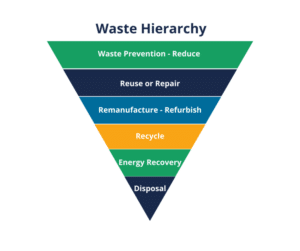
Focusing on the waste hierarchy is a helpful place to start. The top of the hierarchy helps businesses maximize the value of the products and materials they’ve already purchased while minimizing disposal costs. The waste hierarchy is as follows:
- Waste Prevention: Avoid creating waste in the first place by purchasing only what is needed, reducing unnecessary materials, and improving business processes.
- Reuse/Repair: Extend the life of products and materials by repairing items or finding opportunities to use them again instead of replacing them.
- Remanufacture/Refurbish: Restore or upgrade products, equipment, or components so they can continue to be used rather than discarded.
- Recycle: Recover valuable materials such as paper, cardboard, plastics, metals, and glass to be processed into new products.
- Energy Recovery: Capture value from waste materials that cannot be reused or recycled by converting them into usable energy.
- Disposal: Send unavoidable waste to landfill only after all other options have been considered.
Simple Waste Reduction Strategies for Your Business
Many waste reduction initiatives are inexpensive to implement and can quickly become part of everyday operations.
In the office:
- Transition to digital documents and forms where possible.
- Print only when necessary (and print double-sided).
- Replace disposable kitchen supplies with reusable alternatives.
- Choose refillable pens, markers, and office supplies.
- Set up clearly labelled recycling stations to improve waste sorting.
In retail or customer-facing businesses:
- Minimize excess product packaging.
- Offer reusable bags or encourage customers to bring their own.
- Donate unsold products that are still usable.
- Choose suppliers with recyclable or reusable packaging.
Even small operational improvements can add up over time, reducing both purchasing costs and waste disposal fees.
Think Circular
One of the most effective ways to reduce waste is to rethink how materials move through your business. Instead of asking, “How do we dispose of this?” consider asking:
- Can this be repaired instead of replaced?
- Can another department reuse it?
- Could another business or organization benefit from it?
- Is there a reusable alternative we could purchase next time?
This type of circular thinking helps keep valuable materials in use for longer, reduces the demand for new resources, and supports a more resilient local economy. Whether it’s reusing shipping materials, purchasing refurbished office furniture, or extending the lifespan of equipment through maintenance and repair, small changes can make a meaningful difference.
Every Small Change Adds Up
Waste reduction doesn’t have to involve major investments or significant operational changes. By understanding where waste is generated and making practical improvements, businesses can lower disposal costs, reduce unnecessary purchasing, and improve overall efficiency.
How Green Economy London Can Help
Green Economy London is here to help businesses identify opportunities to reduce waste and implement practical sustainability initiatives. Members have access to practical tools, educational resources, one-on-one coaching, workshops, networking opportunities, and a community of local organizations committed to continuous environmental improvement. Whether you’re looking to reduce waste, conserve water, lower greenhouse gas emissions, or develop a broader sustainability strategy, our team can help you identify opportunities and turn ideas into action.
Interested in taking the next step? Learn more about the benefits of membership and how Green Economy London can help your organization achieve its sustainability goals by visiting our Become a Member page: https://greeneconomylondon.ca/meet-our-members/become-a-member/