
Businesses across Canada are facing growing pressure to reduce greenhouse gas (GHG) emissions. Whether driven by customer expectations, corporate sustainability commitments, supply chain requirements, or cost savings opportunities, understanding and reducing emissions is becoming an important part of doing business.
The good news? Reducing emissions doesn’t always require major operational changes. Many organizations can make meaningful progress through practical retrofit projects, smarter energy use, and employee transportation initiatives.

Green Economy London’s Emissions Reduction Guidebook highlights practical actions organizations can take to support long-term sustainability goals.
Download Here
Understanding Scope 1, 2, and 3 Emissions
Before taking action, it’s important to understand where emissions come from.
Scope 1: Direct Emissions
Scope 1 emissions are generated directly by sources your organization owns or controls. Examples include:
- Natural gas used for building heating
- Fuel used by company-owned vehicles
- Refrigerant leaks from cooling equipment
These emissions are often some of the easiest for organizations to identify and address.
Scope 2: Purchased Energy
Scope 2 emissions come from the energy grid including electricity, heating, or cooling purchased by your organization.
While these emissions occur off-site at power generation facilities, they are still associated with your organization’s energy consumption. Improving energy efficiency can significantly reduce both emissions and operating costs.
Scope 3: Value Chain Emissions
Scope 3 emissions are indirect emissions that occur throughout your value chain. These can include:
- Employee commuting
- Business travel
- Purchased goods and services
- Waste disposal
- Transportation and distribution
For many organizations, Scope 3 emissions make up the largest share of their carbon footprint.
Practical Projects That Reduce Greenhouse Gas Emissions
Many emissions reduction opportunities also deliver financial savings through reduced energy consumption and operating costs.
Upgrade to LED Lighting
Lighting retrofits remain one of the simplest and most cost-effective emissions reduction projects. Replacing older lighting systems with high-efficiency LED fixtures can significantly reduce electricity consumption while improving workplace lighting quality.
Improve Building Controls
Smart thermostats, occupancy sensors, and building automation systems help ensure energy is only used when and where it is needed. These upgrades can reduce unnecessary heating, cooling, and lighting loads throughout a facility.
Upgrade HVAC Equipment
Heating and cooling systems are often among the largest energy users in commercial buildings. Replacing aging HVAC equipment with high-efficiency alternatives can reduce both emissions and utility costs while improving occupant comfort.
Improve Building Envelope Performance
Projects such as insulation upgrades, weatherstripping, and improved windows can reduce heating and cooling demands year-round. These measures are particularly valuable for older buildings with significant energy losses.
Electrify Equipment and Vehicles
Transitioning from fossil fuel-powered equipment and vehicles to electric alternatives can significantly reduce Scope 1 emissions while preparing businesses for a lower-carbon future.
Bike Month Spotlight: Reducing Employee Commuting Emissions
When businesses think about emissions, they often focus on buildings and equipment. However, employee commuting is a common source of Scope 3 emissions. June is Bike Month, making it a great time for organizations to encourage active transportation.
Supporting cycling can:
- Reduce commuting-related emissions
- Improve employee health and well-being
- Reduce parking demand
- Demonstrate environmental leadership
Simple actions such as installing secure bike parking, offering cycling incentives, or participating in workplace cycling challenges can help employees choose lower-carbon transportation options.
Businesses interested in supporting employee cycling can explore local initiatives such as the Bikes for Business program offered through the London Bicycle Café and resources available through Smart Commute London.
How Green Economy London Can Help
For many organizations, the biggest challenge isn’t finding ways to reduce emissions, it’s knowing where to start.
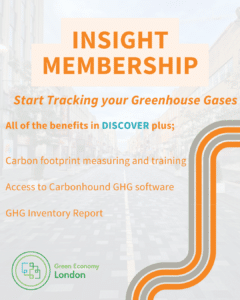
Green Economy London’s Insight and Lead memberships provide businesses with the tools, resources, and support needed to understand, measure, and reduce their environmental impact.
Through both membership streams, organizations gain access to Carbonhound, a Canadian carbon accounting platform that helps businesses measure and track their Scope 1, Scope 2, and Scope 3 emissions. By identifying major emissions sources, businesses can prioritize projects that deliver the greatest environmental and financial impact.
Members also receive support through:
- Carbon footprint measurement and reporting
- Sustainability action planning
- Benchmarking and performance tracking
- Educational workshops and resources
- Peer learning opportunities with local sustainability leaders
- Recognition for environmental achievements
Whether your organization is just beginning its sustainability journey through an Insight Membership or advancing a more comprehensive emissions reduction strategy through a Lead Membership, Green Economy London can help turn climate goals into measurable results.